Home
Oriental Wisdoms
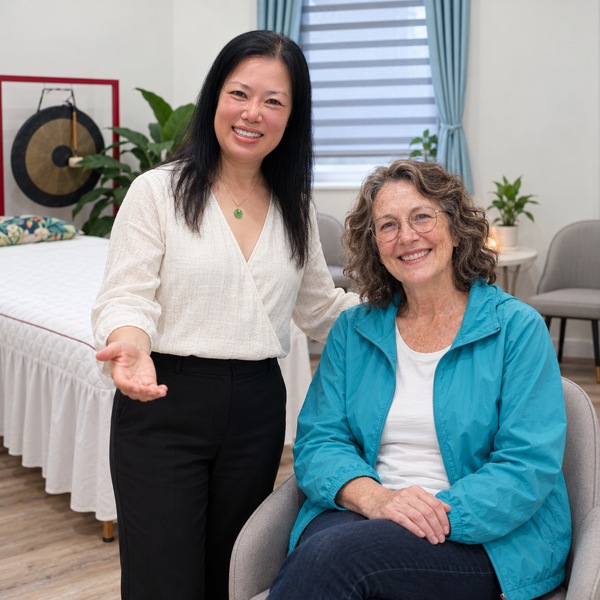
What actually happens, which nobody explains
Most pages about Chinese medicine explain the philosophy. Far fewer explain what you will experience if you walk through the door, which is what most people actually want to know.
The first hour is mostly questions
Expect to talk for a long time. When the problem started. What makes it better and worse. How you sleep, what you eat, how your digestion is, what your energy does across the day. What you take — prescriptions, anything from a pharmacy shelf, anything herbal.
People sometimes find this disconcerting, because they came about a shoulder and are being asked about their sleep. That is the method rather than idle curiosity: the tradition's whole approach is that those things sit together.
Then an examination you may not expect
Pulse at both wrists, taken for longer than a doctor would. A look at your tongue. Then whatever is relevant to the actual complaint — the area itself, how it moves, where it hurts.
The needles
Much finer than the ones used for blood tests — closer to a hair than to a syringe. Most people feel a dull heaviness or a brief ache rather than a sharp pain, and many feel nothing at all at some points.
You lie still for around twenty minutes afterwards, with a way to call someone. Plenty of people fall asleep. If anything feels sharp, say so: it should be adjusted, not endured.
What you should leave knowing
Three things, and if any is missing, ask before you go. What the practitioner thinks is going on, in plain words. Two or three specific things to do before next time. And a realistic sense of how many appointments before you should expect to see a change — including when they would tell you to stop.
That last one is the test of a good practitioner. Anybody can sell a tenth session; being told at the fourth that this is not working is rarer and far more valuable.
What will not happen
Nobody will tell you to stop seeing your doctor or to change a prescription. Nobody will promise an outcome. Nothing will be sold to you from this page — herbs are never supplied without a consultation, because what is appropriate depends on your history and what you already take.
Before you book
If what you have is new, getting worse, or comes with weight loss, bleeding, chest pain, breathlessness or a change in your nervous system, see a doctor first. That is the right order, and any practitioner worth seeing will tell you the same.
Booking, and where
141 Longueville Road, Lane Cove NSW. Lower North Shore, on the village main street, with buses along Longueville Road and street parking nearby — metered and timed in the middle of the day, which is worth knowing if you have booked an hour.
Phone 0410 699 065. Tell us what is going on when you ring and we will tell you whether this is the right place, including when the answer is your GP first.
Not an emergency service. 000 for an emergency, healthdirect on 1800 022 222 for advice at any hour.
This site is still being built
More pages are on the way.